

This post may contain affiliate links. See our affiliate disclaimer here.
RV gas alarms, which detect and alert you to the presence of propane or carbon monoxide in your RV, are an essential safety device that every camper needs. But having a gas alarm in your RV isn’t enough to keep you safe.
Knowing the expiration date of your RV’s gas alarm and knowing what to do if your gas alarm sounds are crucial pieces of knowledge for RV campers. Keep reading to learn everything you need to know about your RV gas alarm.
This post is sponsored by etrailer.com. They’re my go‑to for RV upgrades and replacement parts. I’ve been ordering from them for years and always get great customer service. I especially love their detailed product descriptions and video tutorials. They make it easy to get the right part on the first try.
What Do RV Gas Alarms Do?
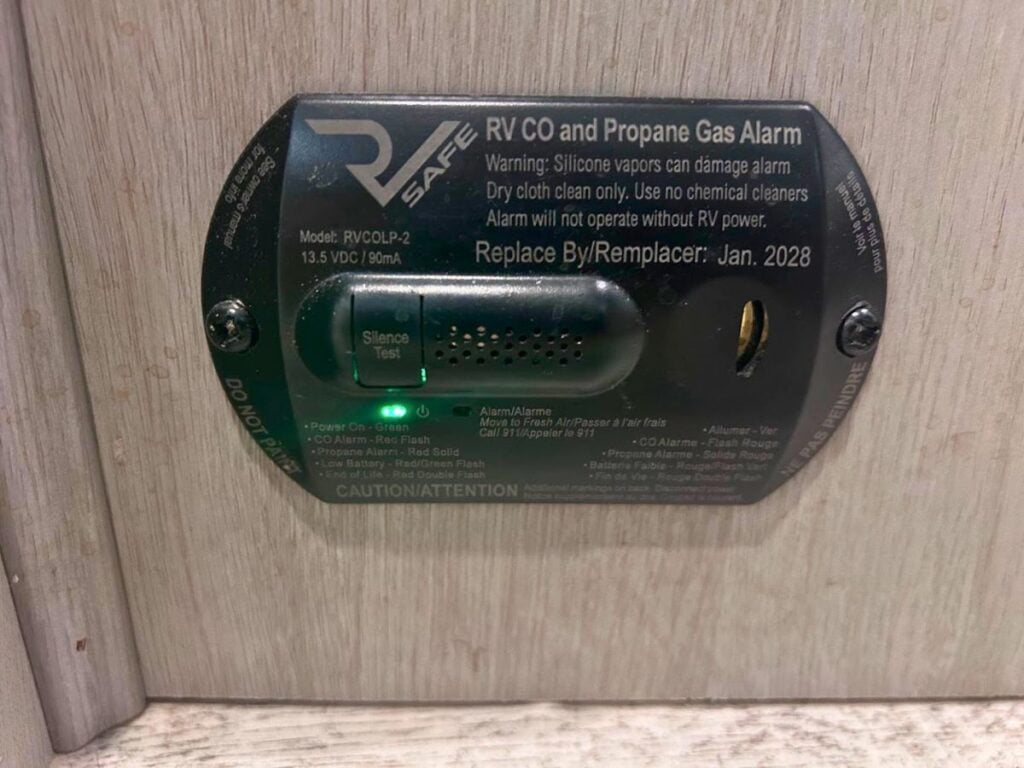
If you’ve spent any amount of time RV camping, you’ve probably noticed the small alarm mounted low on a wall somewhere inside your camper. Most RVers know it’s there, but many don’t give it much thought until it starts beeping.
RV gas alarms are designed to detect dangerous gases inside your RV and alert you before those gases reach dangerous levels. Depending on the type of alarm installed in your RV, it may detect propane, carbon monoxide, or both.
Propane is used to power many of the appliances we rely on while camping, including furnaces, water heaters, refrigerators, and stoves. While propane is generally very safe when your RV’s systems are functioning properly, leaks can occur. Because propane is heavier than air, it settles near the floor, which is why propane detectors are usually installed low on an interior wall.
Carbon monoxide is another serious concern for RV owners. Unlike propane, carbon monoxide is odorless and colorless, making it impossible to detect without an alarm. Carbon monoxide can be produced by fuel-burning appliances, generators, and vehicle exhaust.
Your RV gas alarm continuously monitors the air inside your camper. When functioning properly, the detector will work as long as the RV’s 12 volt battery power is on. If propane or carbon monoxide reaches unsafe levels, the alarm sounds to alert you so you can take action before the situation becomes dangerous.
It’s a small device that most of us rarely think about, but it plays a major role in keeping RVers safe.
When Do RV Gas Alarms Expire?
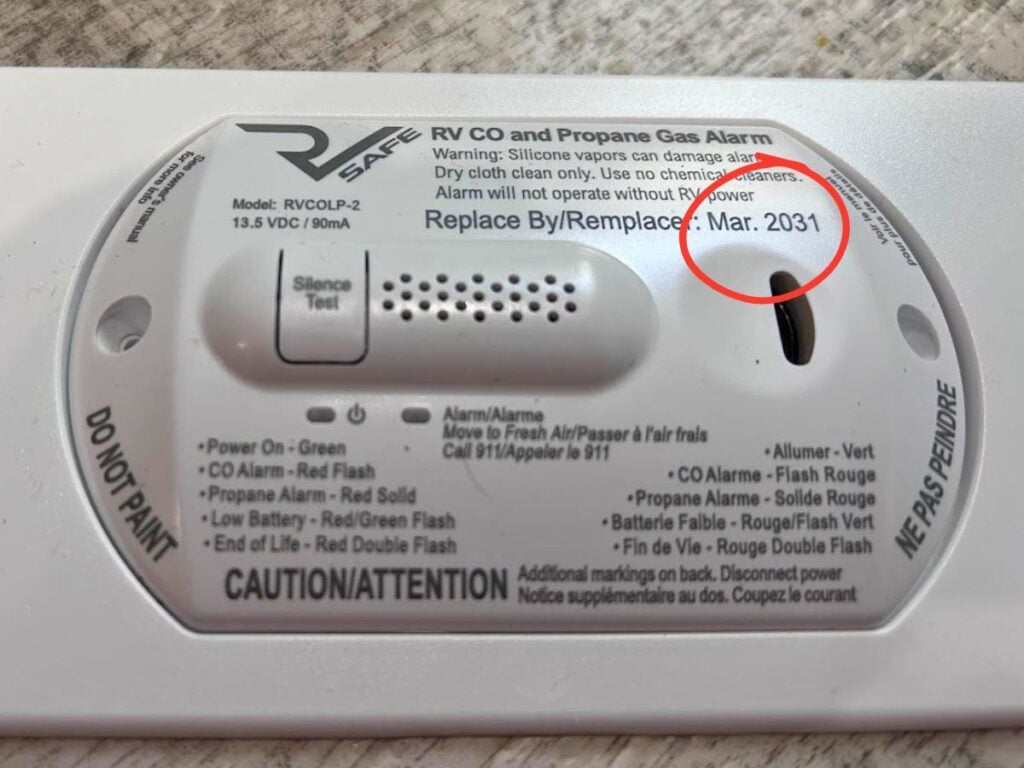
One thing many RV owners don’t realize is that RV gas alarms don’t last forever. RV gas alarms contain sensors that degrade over time. As those sensors age, they become less reliable and eventually need to be replaced.
Most RV gas alarms have a lifespan of around 5 years, although the exact lifespan varies by manufacturer and model. In most cases, the expiration date or replacement date is printed directly on the alarm itself, sometimes on the front, sometimes hidden on the back.
If you’ve never checked yours, now is a good time.
Take a minute to locate your gas alarm and look for a manufacturing date, expiration date, or recommended replacement date. You may discover that your detector is already past its recommended service life.
Even if the alarm appears to be functioning normally, an expired detector may not provide the protection you expect when you need it most.
Considering how inexpensive replacement detectors are compared to the potential consequences of a failed alarm, replacing an expired unit is an easy decision.
What To Do When Your RV Gas Alarm Goes Off
A year after we moved into our first RV, our gas alarm started going off at 3 a.m. As new RVers, we had no idea what to do.
We quickly got out of the RV, but honestly, we were tired, confused, and trying to figure out whether we had an actual emergency on our hands. Thankfully, it turned out to be a false alarm. Even though the RV was only about a year old, the detector itself had been manufactured several years before the RV was built and had reached the end of its service life.
Looking back, the situation would have been a lot less stressful if we had known exactly what the alarm was trying to tell us. That’s why one of the best things you can do right now is familiarize yourself with your gas alarm before it ever goes off.
Many RV gas alarms use different combinations of lights and sounds to communicate different conditions. On the RV Safe alarm, for example, the indicator light guide is printed directly on the front of the unit, making it easy to identify what the alarm is trying to tell you.
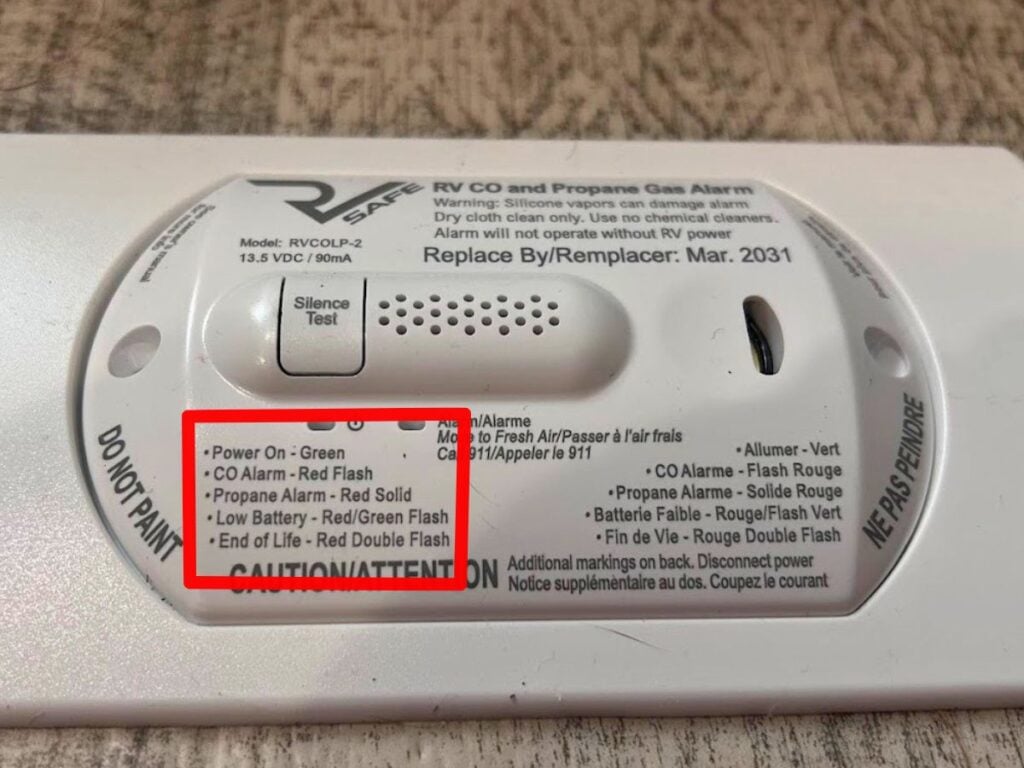
Before your alarm ever sounds, take a picture of the front of the detector or save a copy of the owner’s manual on your phone. If an alarm goes off in the middle of the night, you’ll be able to quickly identify whether you’re dealing with a propane alarm, a carbon monoxide alarm, a low battery warning, or an end-of-life notification.
If your alarm sounds, the first thing you should do is check the indicator lights and listen to the alarm pattern.
For example, on the RV Safe alarm:
- A carbon monoxide alarm uses a four-chirp pattern with a flashing red light.
- A propane alarm uses constant beeping with a solid red light.
- A low battery condition causes the alarm to chirp once per minute while both LEDs flash once per minute.
- An end-of-life or detector failure warning causes the alarm to chirp once per minute while both LEDs double flash once per minute.
Once you’ve identified the type of alarm, follow the appropriate safety procedures.
If You Have a Propane Alarm
If the alarm is sounding with constant beeps indicating propane is present, RV Safe recommends:
- Press the Silence/Test button.
- Evacuate everyone from the RV.
- Shut off the propane supply at the tank.
- Do not touch electrical switches.
- Do not start the RV or generator.
- Contact a qualified RV technician or propane service technician.
- If necessary, contact the local fire department.
- Do not turn the propane back on until the leak has been repaired.
If You Have a Carbon Monoxide Alarm
If the alarm is sounding a four-chirp pattern indicating carbon monoxide is present, RV Safe recommends:
- Press the Silence/Test button.
- Move everyone to fresh air immediately.
- Call emergency services if needed.
- Do not re-enter the RV until it has been aired out and the alarm returns to normal operation.
The RV Safe alarm can be silenced for up to 5 minutes by pressing the Silence/Test button. The red LED will flash each second while the alarm is silenced. The original alarm state will resume after 5 minutes if the CO or propane levels still exceed safe levels.
If the Alarm Indicates End-of-Life
If the alarm is chirping once per minute and showing the end-of-life warning pattern, the detector has reached the end of its service life and should be replaced immediately. This is what happened to us during that 3 a.m. alarm years ago.
The important thing to remember is that every alarm should be taken seriously until you determine exactly what caused it. Learning what the lights and sounds mean before an alarm goes off can save a lot of stress if you’re ever awakened by one in the middle of the night.
Replacing your RV Gas Alarm
Selecting the Right Alarm for Your RV
Before ordering a replacement detector, you’ll want to make sure you’re purchasing one that is compatible with your RV.
If you’re replacing an expired alarm, I recommend looking for the model number on your existing detector. Depending on the alarm, the model number may be printed on the front or on the back of the unit.
Start by searching that model number on etrailer.com. If the exact detector is no longer available, etrailer’s product experts can often help you find a compatible replacement.
When our detector reached the end of its service life, we chose the RV Safe RV Gas Detector from etrailer. This universal detector can be used in many different RV makes and models, making it a convenient option if your original detector is no longer available.
Installing the Alarm
Fortunately, replacing an RV gas alarm is usually a fairly simple DIY project.
Most RV gas alarms are connected directly to your RV’s 12-volt electrical system and mounted to an interior wall.
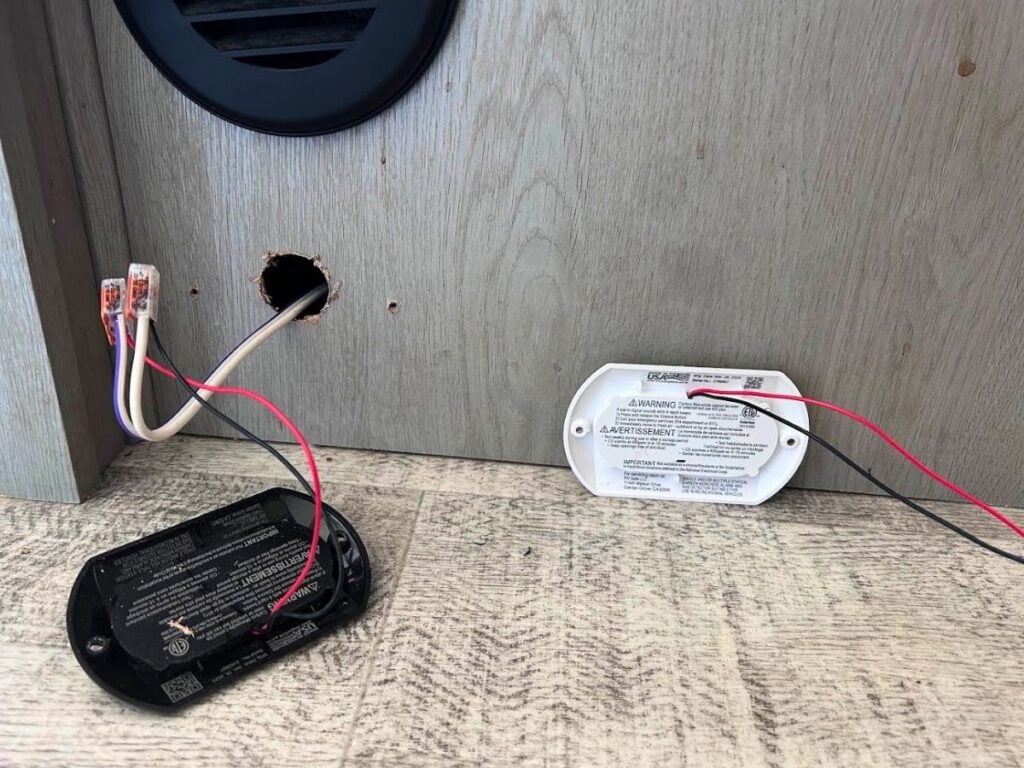
The first step is turning off power to the RV. Disconnect from shore power and disconnect the RV battery. Next, remove the existing alarm from the wall. Most detectors are secured with a few screws and connected using simple wire connections.
Take a photo of the wiring before disconnecting the old unit, so you can confirm the correct installation. After disconnecting the old unit, connect the wiring for the new detector according to the manufacturer’s instructions and your reference photo.
Once the wiring is complete, mount the new detector to the wall, restore power, and test the unit. The entire process typically takes less than 10 minutes and requires only basic tools.
RV gas alarms aren’t the most exciting part of RV ownership, but they’re one of the most important. These small devices provide an early warning if propane or carbon monoxide reaches dangerous levels inside your RV. But like many safety devices, they don’t last forever.
If you haven’t checked your RV gas alarm recently, take a few minutes to locate it and verify its expiration date. If it’s expired or nearing the end of its service life, replacing it is a simple project that can provide years of additional protection.
For more important safety tips, check out our RV trip safety checklist.
Happy Camping!

Christina Pate is a seasoned full-time RVer who, along with her husband Justin, has journeyed across the US, Canada, and Mexico. Drawing from her extensive travels, RV repairs and RV renovations, she founded Travels with Ted to guide and inspire fellow RV enthusiasts. Christina is also the co-author of The Owner’s Guide to RV Maintenance and the creator of My RV Log Book.
