
This post may contain affiliate links. See our affiliate disclaimer here.
Condensation is a common problem for RVers camping in cold weather. If you have ever woken up to water dripping down your RV windows, you know exactly what I am talking about.
It is important to manage condensation because all of that moisture can eventually lead to mold, mildew and damage to your RV.
Fortunately, RV condensation is usually pretty easy to manage. After over 10 years of full-time RVing, I have spent plenty of time camping in cold weather. Over the years, I have learned a few simple ways to reduce condensation and keep our RV dry. Here is everything you need to know to stop RV condensation.
This post is sponsored by etrailer.com. They’re my go‑to for everything RV‑related, from campsite gear to hitches and replacement parts. I’ve been ordering from them for years and always get great customer service. I especially love their detailed product descriptions and video tutorials. They make it easy to get the right gear the first time.
Why Does Condensation Form in an RV?
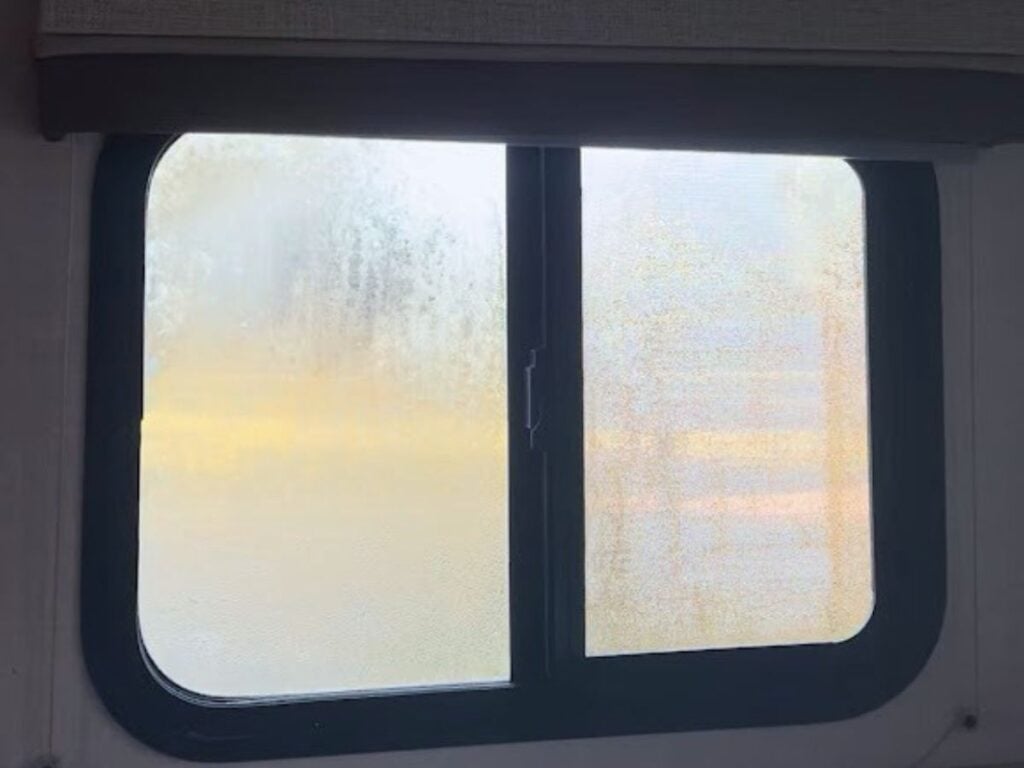
Condensation occurs when warm air comes into contact with a cold surface.
When you are camping in cold weather, you are heating the inside of your RV while the windows and exterior walls stay cold. When the warm air inside hits those cold surfaces, moisture forms.
You will usually notice condensation first on your RV windows. But moisture can also collect on walls, inside cabinets, in closets and behind furniture.
Everyday activities also add moisture to your RV. Cooking, showering and even breathing release moisture into the air. Since RVs are small spaces, humidity can build up quickly, especially when all of the windows and vents are closed.
How to Stop RV Condensation
Crack Your Roof Vents
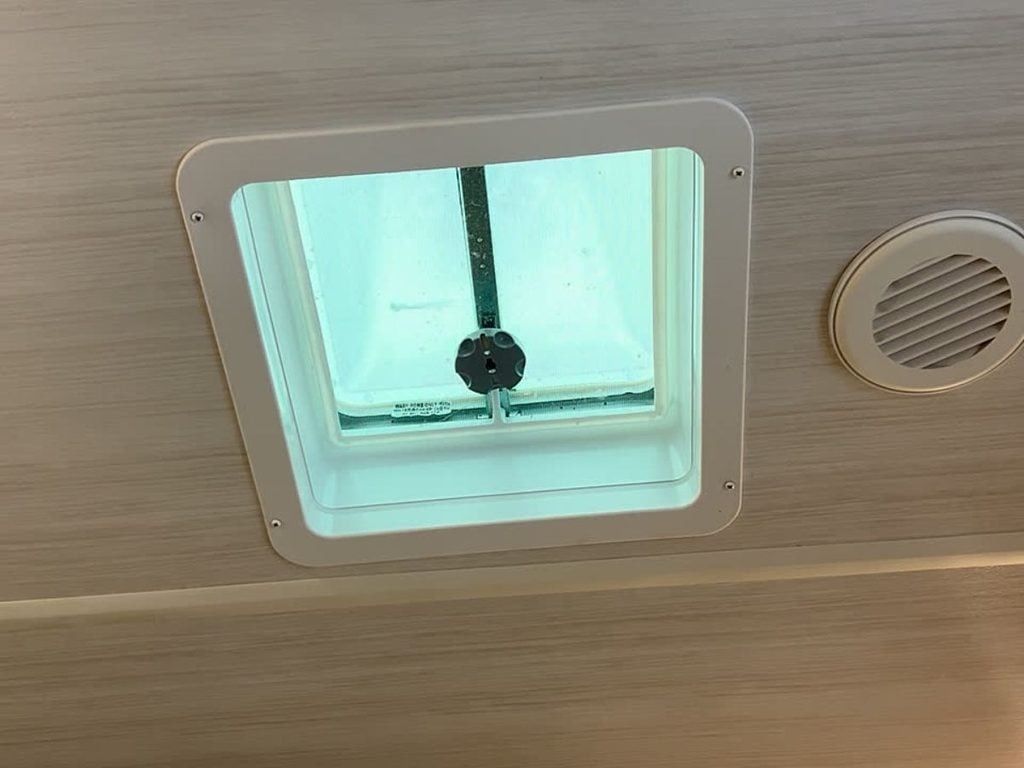
The simplest way to reduce condensation is to let the humid air escape. When we are dealing with condensation, we crack our roof vents. If you have powered roof vent fans, turning those on will remove moisture even faster.
I know opening a vent when you are trying to heat your RV sounds counterproductive. But you don’t need to open it all the way. Cracking a vent allows some of that humid air to escape without letting out too much heat.
Adding a roof vent cover allows you to keep the vent open in any weather without allowing additional moisture into your RV.
Use Your Exhaust Fans When Cooking
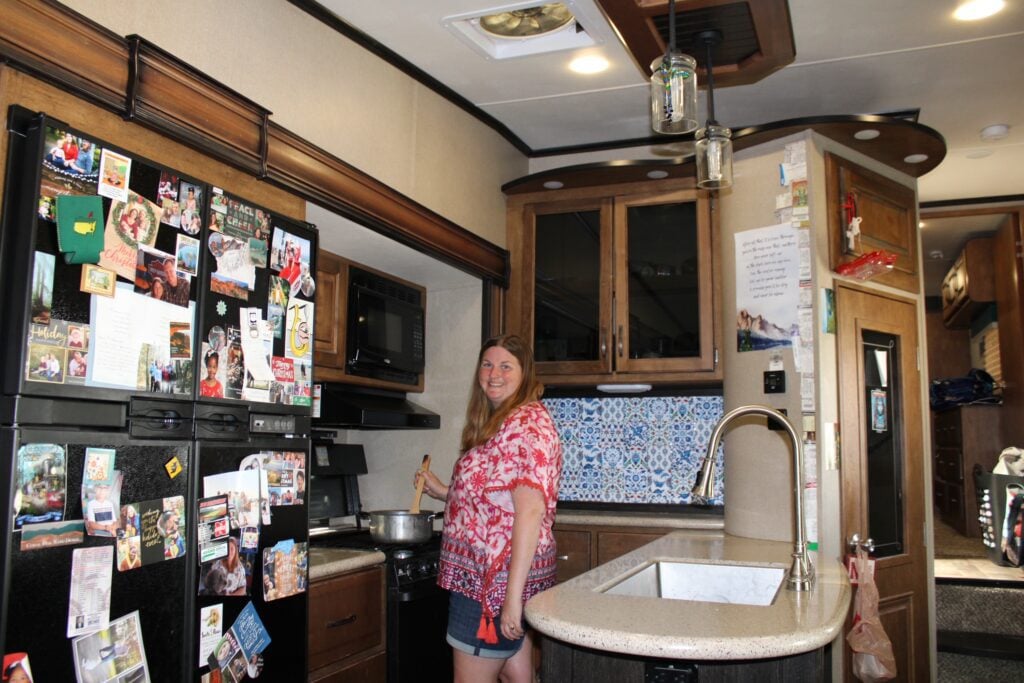
Cooking puts a lot of extra moisture into the air, especially when you are boiling water. Whenever you cook inside your RV, turn on your exhaust fan or open a nearby roof vent.
If you are dealing with heavy condensation in your RV, avoid using the stovetop. Grill outside or make meals that don’t need to be cooked.
Always Run the Bathroom Fan When Showering
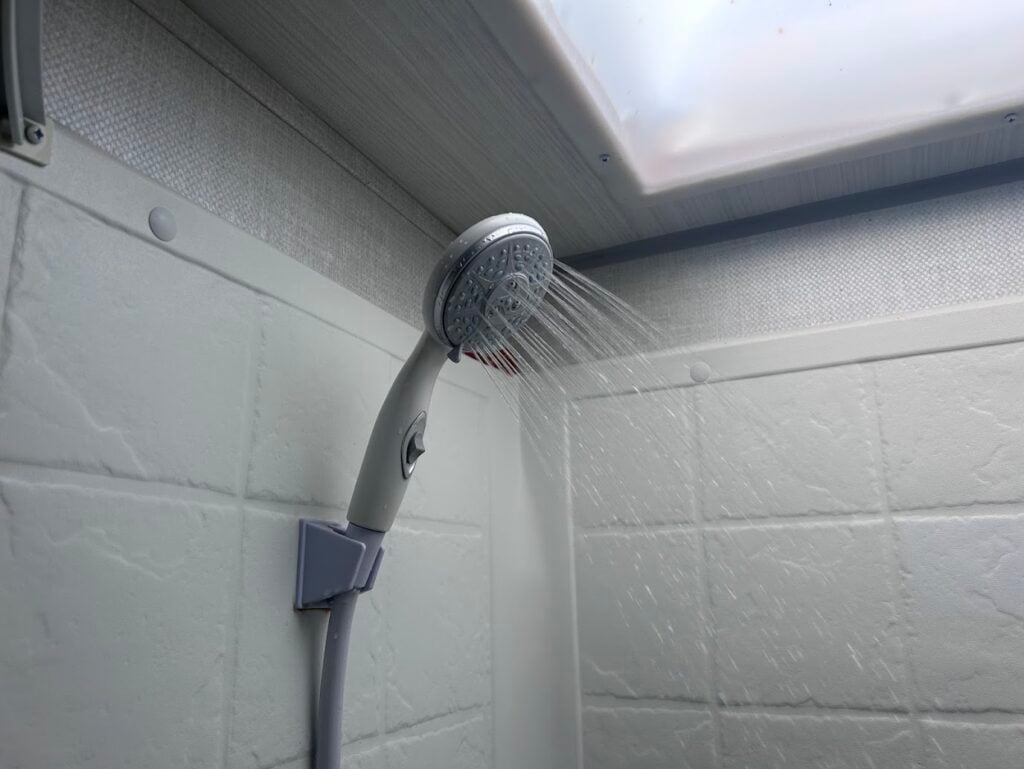
Showers are another major source of moisture. We always open the bathroom vent and run the fan while showering. I also leave the fan running for a few minutes after the shower is over.
This gives the steam somewhere to go instead of allowing it to spread through the RV. If you are dealing with a lot of condensation, consider taking shorter showers or using the campground bathhouse instead.
Run a Small Dehumidifier
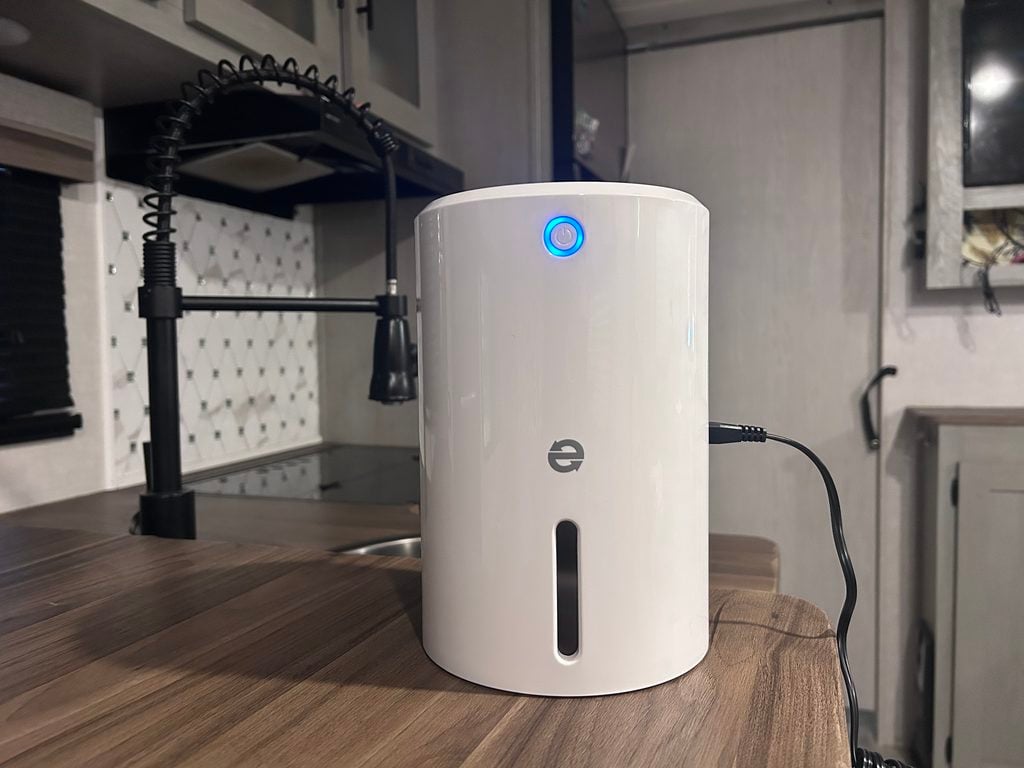
If ventilation isn’t enough, a dehumidifier can remove excess moisture from the air.
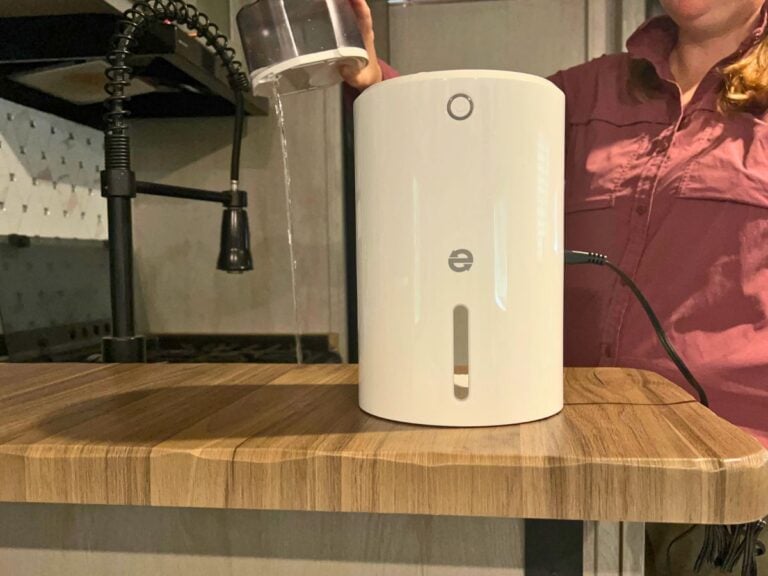
We use the Eva-Dry Electric Medium Dehumidifier because it is compact and doesn’t use much electricity. The unit is only 5½ inches wide and 8½ inches tall, so it doesn’t take up much space in our small travel trailer.
It is designed for spaces up to 1,200 cubic feet and can remove up to about 8 ounces of moisture in 24 hours. The water collects in a removable 30-ounce tank. When the tank is full, the unit automatically shuts off. Then, we empty the tank and put it back in place so the dehumidifier can keep working.
It also only uses 22.5 watts of power. A small dehumidifier like this isn’t going to replace proper ventilation. But it makes a big difference when we are camping in cold weather and moisture keeps building up inside the RV.
Open Your Cabinets and Closets
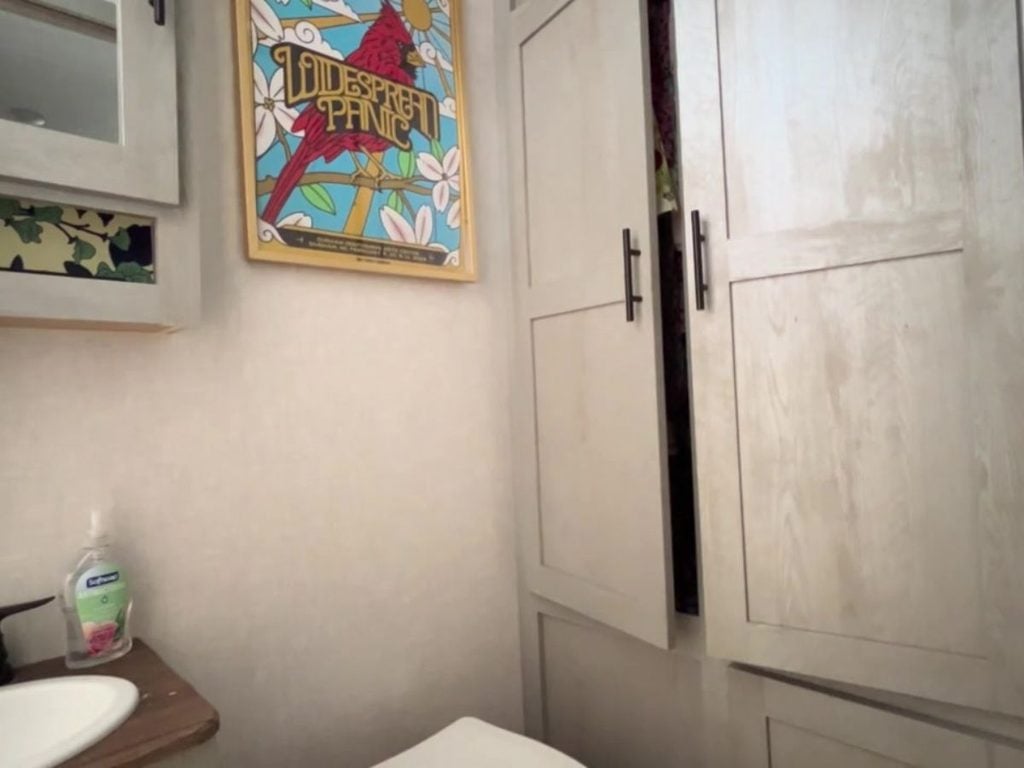
Poor air circulation can cause condensation to form inside cabinets and closets. This is especially common in cabinets located along exterior RV walls. The inside of the cabinet stays colder than the rest of the RV, and moisture forms on the walls.
The easiest solution is to leave cabinet and closet doors partially open. This allows warm air to circulate inside and helps keep the temperature closer to the rest of the RV.
Also, avoid packing cabinets and closets completely full. Leaving a little space allows air to circulate around your belongings.
Regularly check inside cabinets and closets during cold weather. Run your hand along the walls and make sure nothing feels damp. It is much easier to deal with a little condensation than mold growing in the back of a cabinet.
Use Moisture Absorbers in Problem Areas
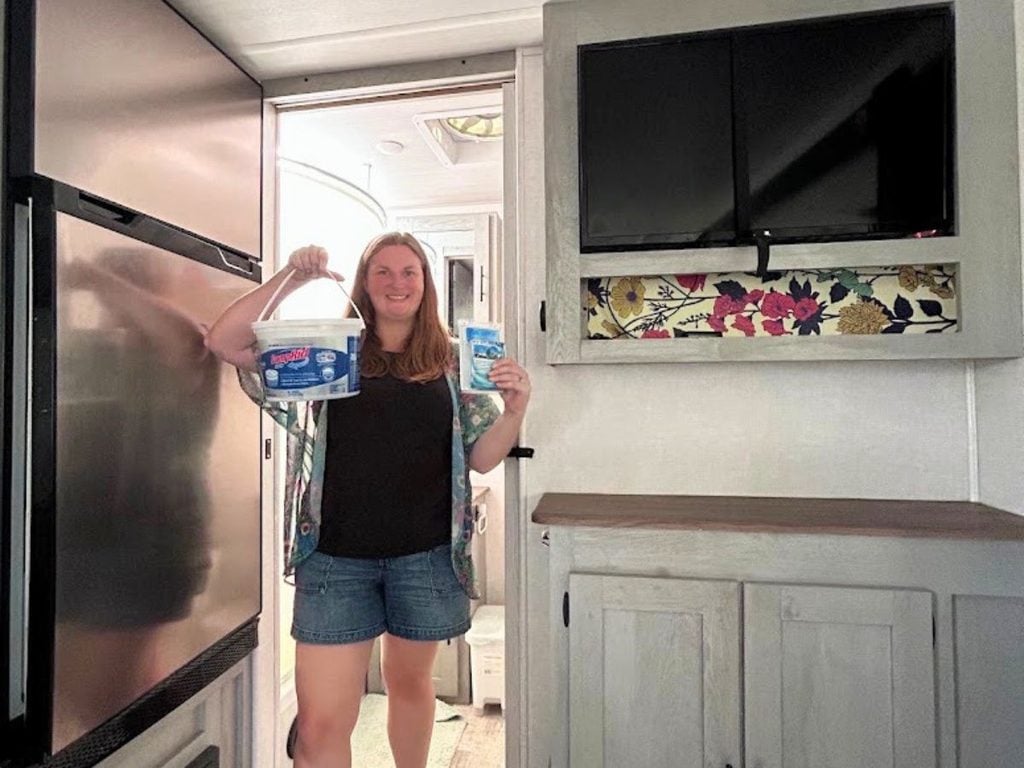
Moisture absorber buckets, like the Camco Mini Dehumidifier, are another easy way to deal with damp areas.
We use them in closets and other small spaces where moisture tends to collect. They don’t require electricity, so they can also be used while boondocking or when the RV is in storage.
Check Behind Furniture and Under Your Mattress
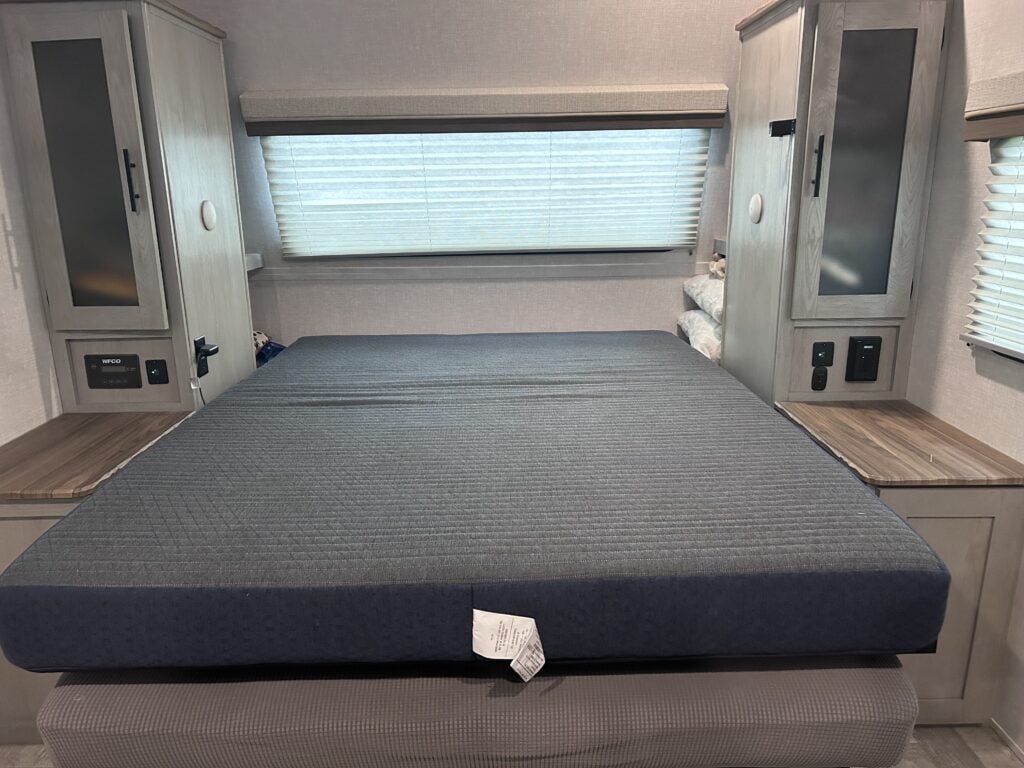
Condensation doesn’t only form in places you can see. Moisture can collect behind furniture, under mattresses and anywhere warm air isn’t circulating well.
This is why I recommend checking these areas regularly when camping in cold weather. Pay special attention to anything sitting directly against an exterior wall.
If one area of your RV is constantly damp, poor airflow may be part of the problem.
Wipe Up Condensation
Even if you take all of these steps, you may still have some condensation during really cold weather. If you see water on your windows or walls, wipe it up.
Wiping down your windows doesn’t fix the humidity problem, but it does prevent water from sitting against your RV walls and window frames.
If your windows are soaked every morning, that is also a good sign that you need more ventilation and a dehumidifier.
Thanks for reading our complete guide to managing condensation in your RV. If you plan to camp into the winter months, check out our full guide to RV camping in cold weather.
Want to avoid condensation and other cold weather camping nuisances? Plan a warm-weather winter road trip instead.
Happy Camping!

Christina Pate is a seasoned full-time RVer who, along with her husband Justin, has journeyed across the US, Canada, and Mexico. Drawing from her extensive travels, RV repairs and RV renovations, she founded Travels with Ted to guide and inspire fellow RV enthusiasts. Christina is also the co-author of The Owner’s Guide to RV Maintenance and the creator of My RV Log Book.
