
This post may contain affiliate links. See our affiliate disclaimer here.
It’s never to fun to wake up on a cold morning, and discover your RV propane tank is empty, and the heat is off. Depending on your RV, an empty propane tank can also mean no hot water, no propane stove and no refrigerator operation.
The problem is that standard RV propane cylinders don’t make it easy to see exactly how much fuel you have left.
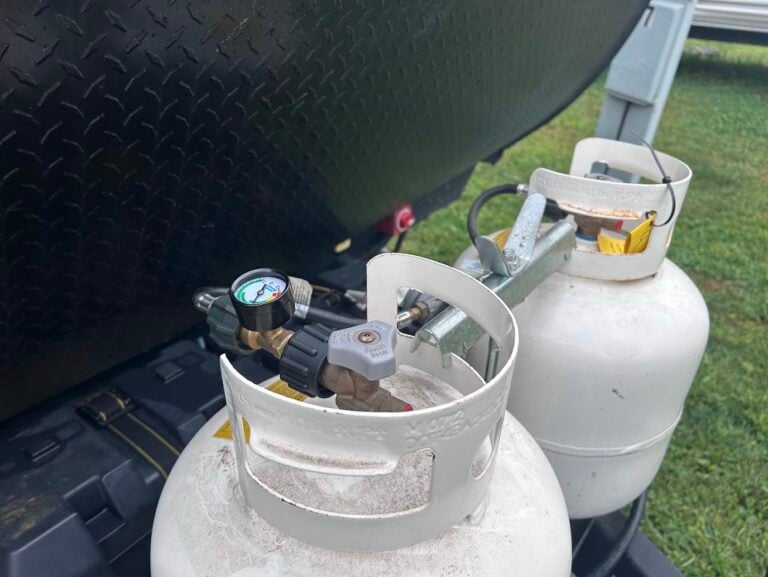
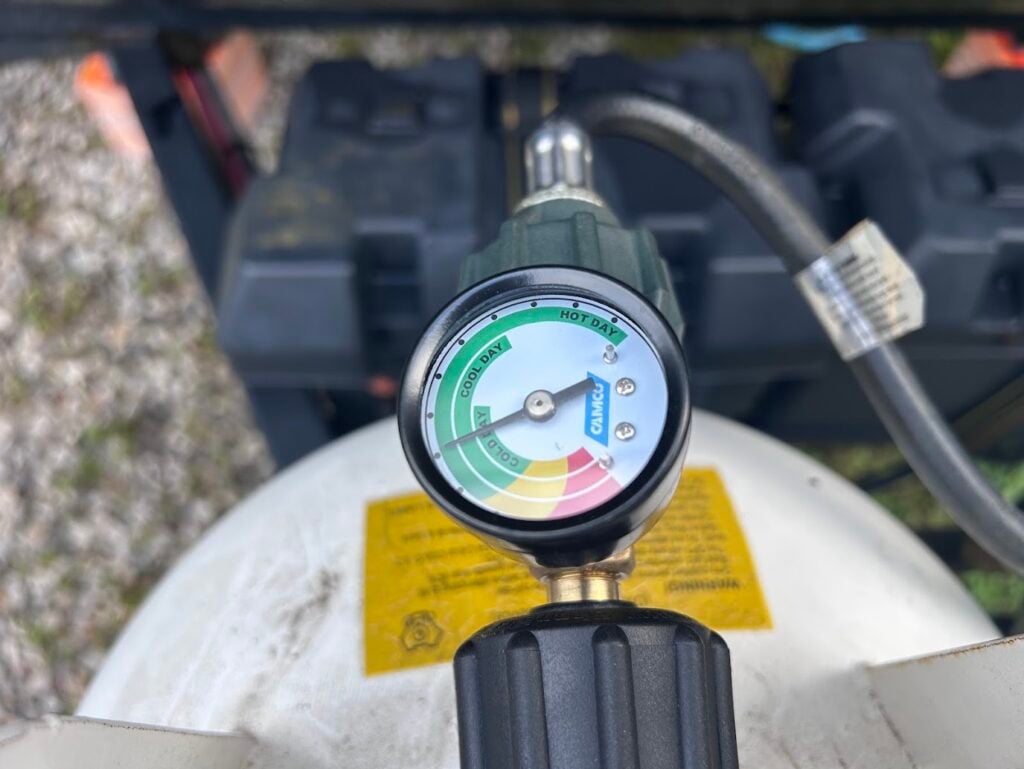
That’s why we installed the Camco Propane Gas Gauge and Leak Detector. It takes less than a minute to install, gives you an easy way to check your propane level and even doubles as a basic propane leak detector.
This post is sponsored by etrailer.com. They’re my go‑to for everything RV‑related, from campsite gear to hitches and replacement parts. I’ve been ordering from them for years and always get great customer service. I especially love their detailed product descriptions and video tutorials. They make it easy to get the right gear the first time.
Why RVers Need a Propane Gauge
If you have portable propane tanks on your RV, you’ve probably tried (and failed) to guess how much propane is left at some point.
You can pick up the tank to estimate its weight or pour warm water down the side and feel for the temperature change, but neither method is especially convenient or accurate.
A propane gauge lets you check your tank before you head out on a camping trip or before a cold night when you know the furnace will be running.
This can be especially useful for RVers who camp in cooler weather. RV furnaces can use a significant amount of propane, and discovering your tank is nearly empty after temperatures drop is not ideal.
How the Camco Propane Gas Gauge Works
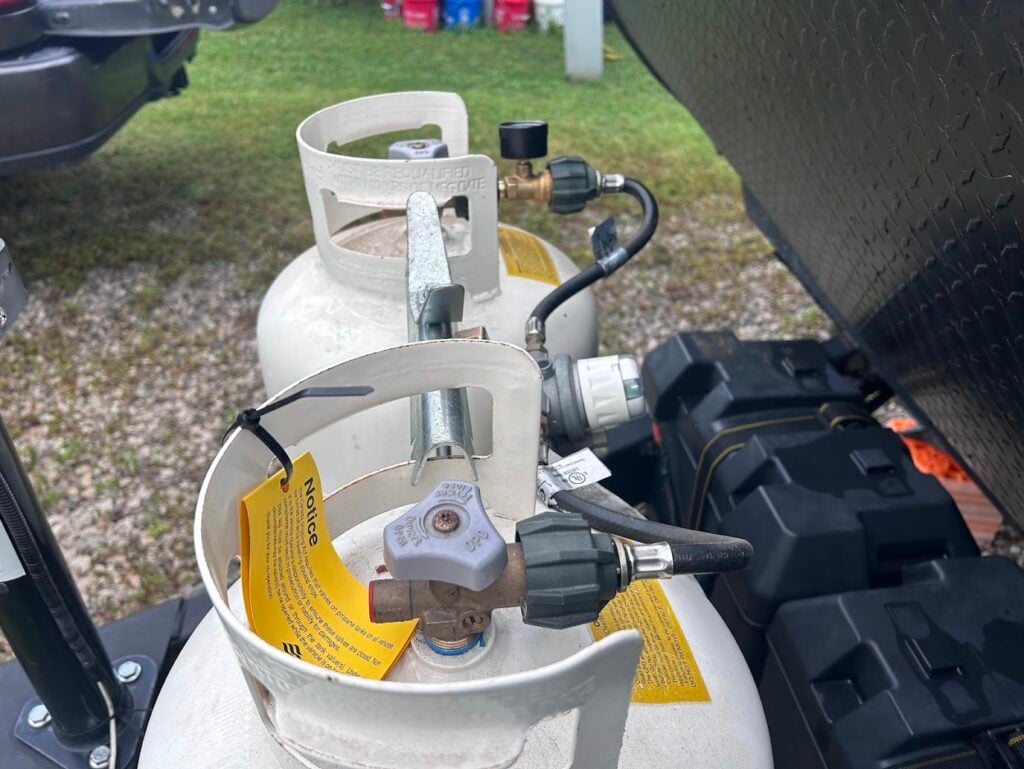
The Camco Propane Gas Gauge and Leak Detector installs between your propane cylinder and the regulator hose.
Installation is simple:
- Turn off your propane appliances and make sure the propane cylinder valve is closed.
- Thread the gauge onto the propane cylinder valve by hand.
- Attach your RV’s propane regulator to the other side of the gauge.
- Hand-tighten the connections according to the manufacturer’s instructions.
- Open the propane cylinder valve.
No tools are required, and Camco specifically warns against using tools because overtightening or cross-threading could damage the connection.
Once propane begins flowing, the gauge needle will move to indicate the approximate propane level. It can take 5 to 15 minutes for the system to stabilize, so don’t expect an accurate reading immediately after opening the tank.
Understanding the Gauge
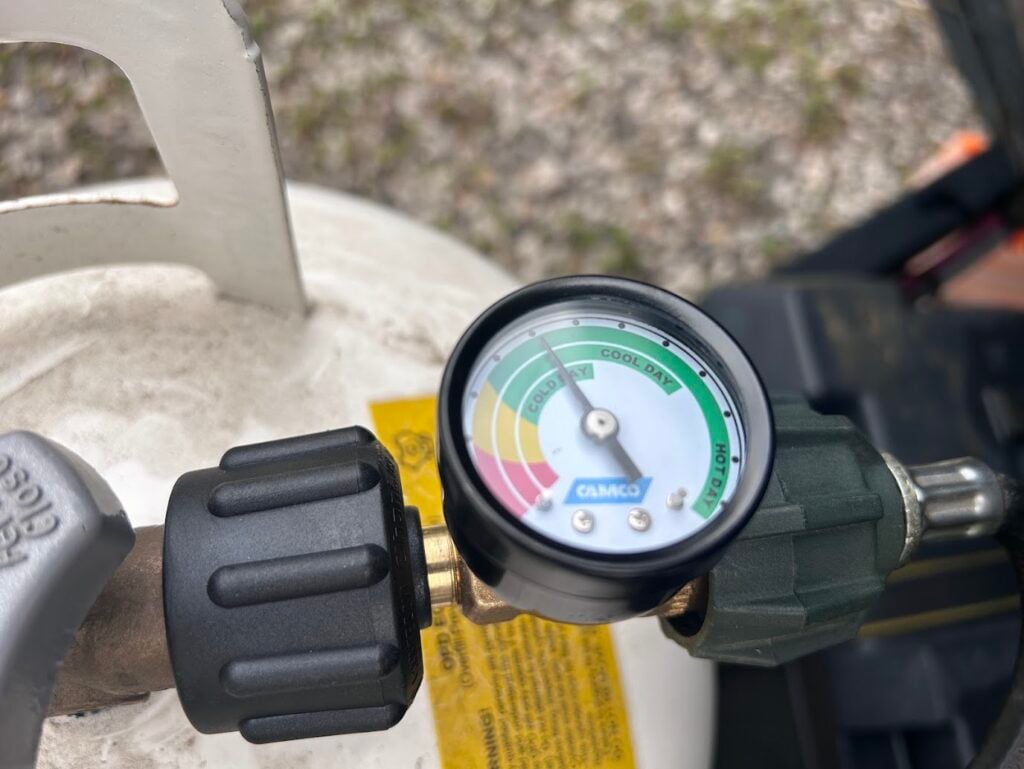
The dial uses three colored areas to make checking your propane simple:
- Green: You have plenty of propane remaining.
- Yellow: Your propane level is getting low.
- Red: It’s time to refill the cylinder.
There is one other important detail: outside temperature affects the reading. The gauge includes warm-day and cold-day references, so you need to look at the appropriate scale for the current air temperature when checking your propane level.
This makes the gauge more useful than simply looking at tank pressure without taking temperature into account.
It Also Checks for Propane Leaks
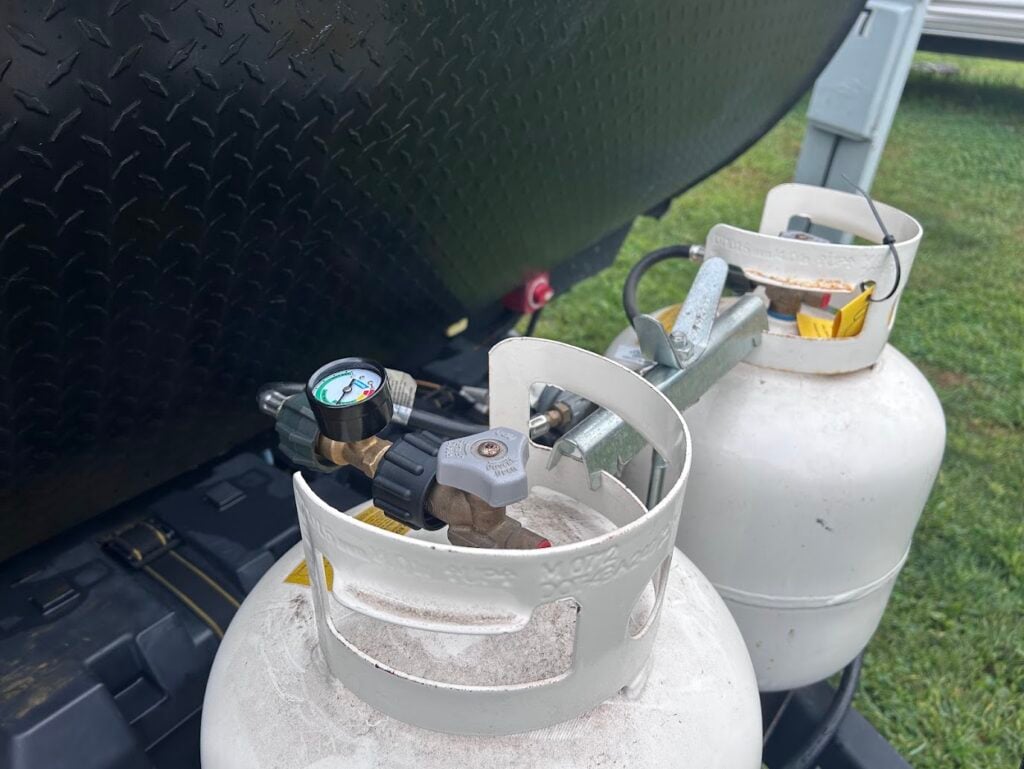
This device isn’t just a propane level gauge. It also functions as a leak detector to protect you and your RV.
To perform the leak test, Camco instructs you to open the propane cylinder to pressurize the system and then close the cylinder valve after about three seconds.
The gauge then monitors the pressure in the propane lines for about one minute. If the needle moves into the red portion of the dial, the system may have a propane leak.
Keep in mind that the gauge can alert you to a potential leak, but it doesn’t tell you exactly where the leak is located. Camco recommends using an approved gas leak detector solution on the connections and watching for bubbles to pinpoint the source.
If you continue to detect a leak after checking the connections, don’t use the propane system until it has been inspected and repaired by a qualified professional.
This is the kind of RV accessory I like because it’s inexpensive, quick to install and useful every time you camp.
Instead of wondering whether you have enough propane to make it through another cold night, you can simply look at the gauge before bed or before leaving for your next trip.
And because it can also help identify a potential propane leak, it also keeps you safer.
If you want an easier way to keep an eye on your RV propane supply, check out the Camco Propane Gas Gauge and Leak Detector at etrailer.
Happy Camping!

Christina Pate is a seasoned full-time RVer who, along with her husband Justin, has journeyed across the US, Canada, and Mexico. Drawing from her extensive travels, RV repairs and RV renovations, she founded Travels with Ted to guide and inspire fellow RV enthusiasts. Christina is also the co-author of The Owner’s Guide to RV Maintenance and the creator of My RV Log Book.
