
This post may contain affiliate links. See our affiliate disclaimer here.
This post is sponsored by Blu Technology. All opinions are my own.
After 10 years of full time RV living, we’ve stayed at hundreds of campgrounds across the country. One thing we’ve learned is that water quality can vary significantly from one campground to another.
Some campgrounds have great tasting water, while others have water that smells or tastes unpleasant. We’ve always recommended using an RV water filter, even when a campground provides potable water.
In this guide, I’ll explain why RV water filtration is important, what to look for in a filtration system, and how to filter the water entering your camper.
Is Campground Water Safe to Drink?
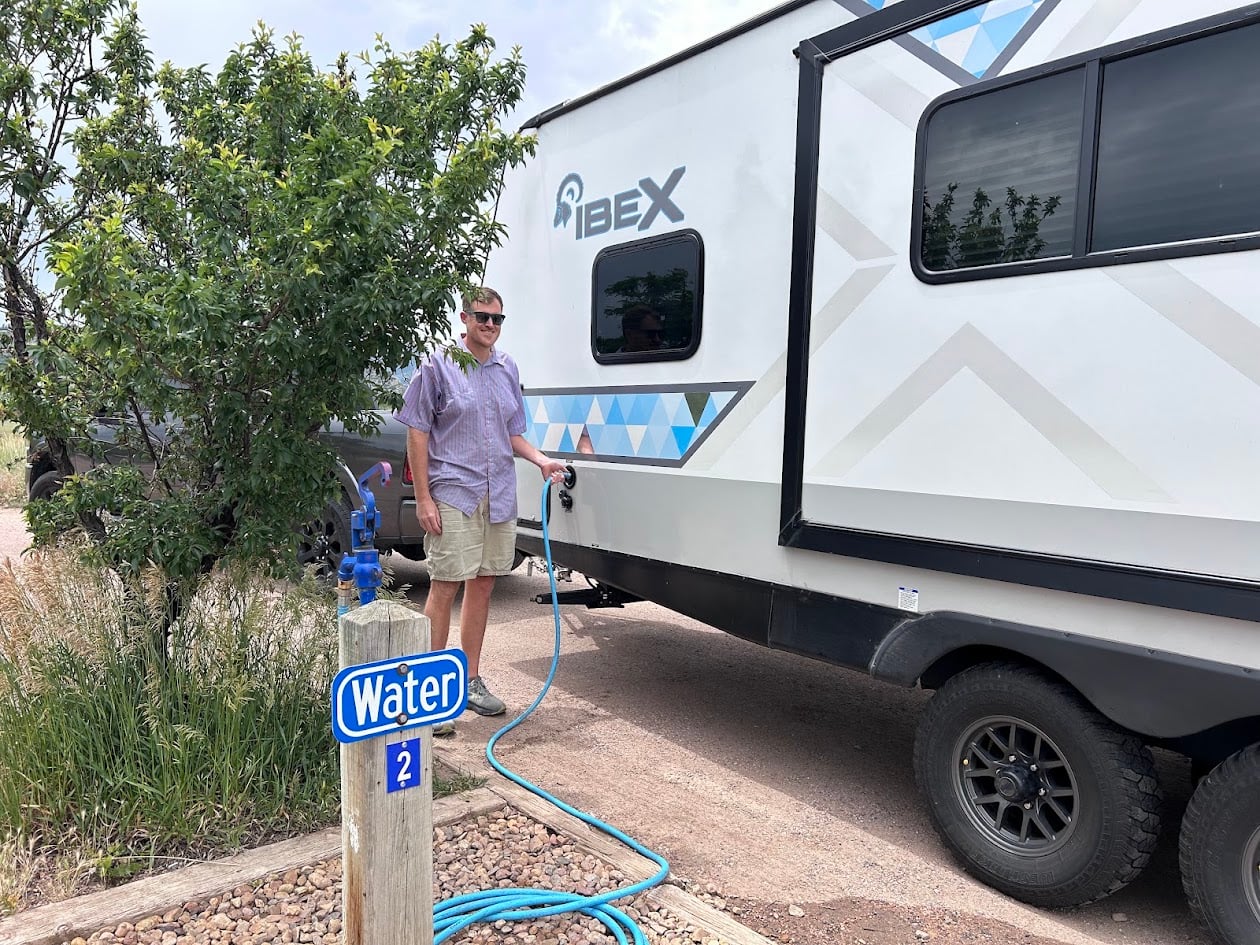
Many established RV campgrounds provide potable water, meaning the water is considered safe for drinking. However, potable water doesn’t necessarily taste good or mean there are no contaminants present.
Campgrounds get their water from different sources, including municipal water systems and private wells. Water quality can vary depending on the source, treatment methods and plumbing infrastructure.
Some common water quality concerns include sediment, chlorine, unpleasant odors and contaminants that may not be visible.
Even when the water is safe to drink, it may have an unpleasant taste or smell. A good RV water filtration system can help address these issues.
Never assume that water from an unmarked or nonpotable source is safe to drink. A standard RV water filter is not designed to make every water source safe.
Do You Need a Water Filter for Your RV?
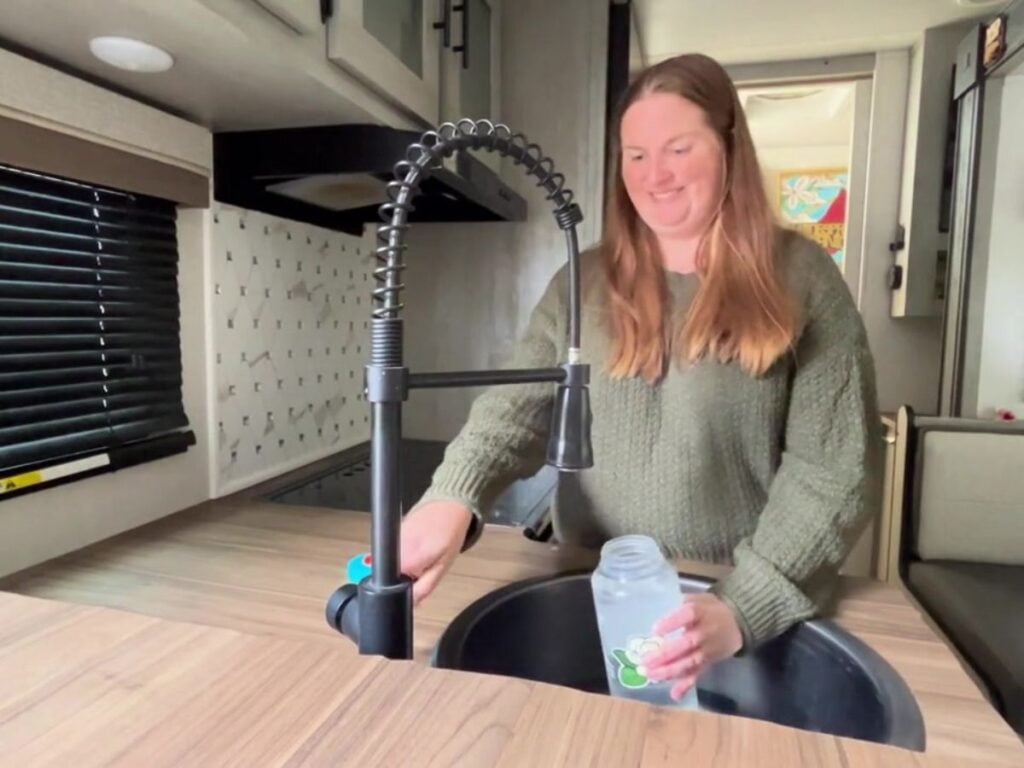
While an RV water filter isn’t required at every campground, I highly recommend using one.
An exterior RV water filtration system filters water before it enters your camper. Depending on the system, it can reduce sediment and certain contaminants while improving the taste and smell of your water.
This is especially helpful when you travel frequently and connect to different water sources.
Filtering your drinking water can also reduce your reliance on bottled water. A family of four drinking four gallons of bottled water per day would spend approximately $2,075 annually and use the equivalent of 11,064 standard plastic water bottles.
A reusable water bottle and a good filtration system can help reduce that expense and the amount of plastic waste generated while traveling.
There are several types of RV water filters. Basic inline filters attach directly to a water hose and typically focus on sediment, taste and odor. Countertop filters are designed to filter drinking water at a specific location.
A multistage exterior filtration system provides more comprehensive filtration before water enters the RV.
What Should You Look for in an RV Water Filtration System?
Not all RV water filters provide the same level of filtration. Here are the main features to consider when shopping for a system.
Filtration Stages: Multistage systems use different filters to address different water quality concerns. Sediment filters remove particles, while activated carbon filters can reduce chlorine taste and odors.
Micron Rating: A filter’s micron rating indicates the size of particles it is designed to capture. A smaller micron rating generally means finer filtration. However, the rating alone doesn’t tell you which dissolved chemicals or microorganisms the filter removes.
Water Flow: Your filtration system should allow enough water flow for everyday activities like showering and washing dishes.
Portability: If you travel frequently, look for a compact system that is easy to connect, disconnect and store.
Filter Replacement: Consider how often cartridges need to be replaced and the cost of replacement filters.
Materials: Look for durable components designed for drinking water applications, especially if the system will be used outdoors regularly.
Our Recommended RV Water Filtration System
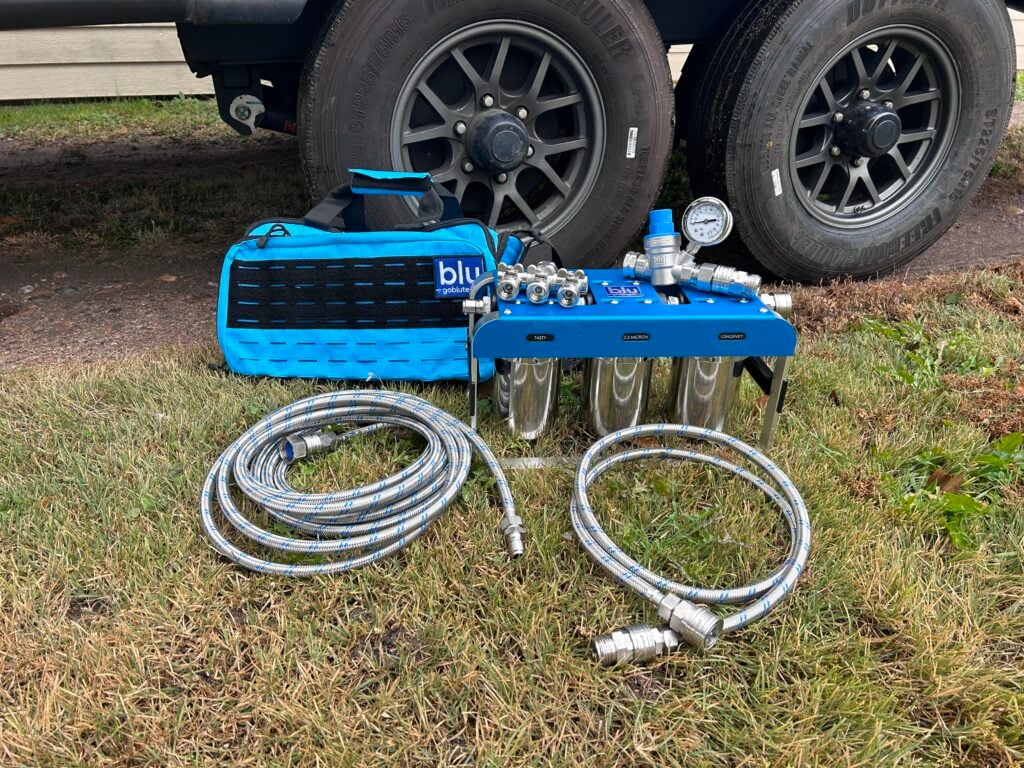
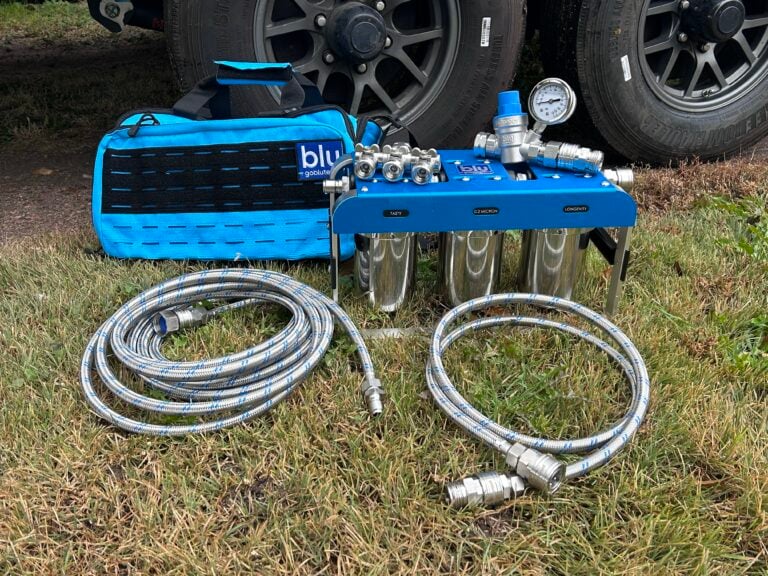
For RVers looking for more comprehensive filtration than a basic inline water filter, I recommend considering the Blu Technology AR3 Essential Bundle.
The AR3 is a portable, three stage filtration system designed to filter water before it enters your RV.
The system includes three different filters:
- Longevity Sediment Filter: A 5 micron filter designed to remove sediment and larger particles.
- High Flow Filter: A 0.2 micron filter designed to capture finer particles.
- Tasty Carbon Filter: An activated carbon filter that helps reduce chlorine, unpleasant tastes and odors.
The 0.2 micron rating is based on the filter manufacturer’s specifications.
Unlike inexpensive disposable inline filters, the AR3 uses three separate filtration stages to address different water quality concerns.
The system also features stainless steel filter housings and quick connect fittings, along with a lightweight aluminum frame.
Another benefit is its compact design. The AR3 uses 5 inch filters and comes with a carrying case, making it easier to store and transport between campsites.
The Essential Bundle includes the equipment needed for a typical RV water hookup:
- AR3 three stage filtration system with installed filters
- 25 foot stainless steel inlet hose
- 5 foot stainless steel RV connection hose
- Stainless steel pressure regulator
- Three way water splitter
- Quick connect fittings
- Carrying case and filter housing key
Blu Technology recommends operating the system at 40 to 60 PSI and designed its filters to minimize pressure loss. The AR3 does not soften hard water, so RVers dealing with mineral buildup may also need a water softener.
You can find more information about the Blu Technology AR3 Essential Bundle on the manufacturer’s website and get a 7% discount if you use our link.
How to Install and Use the Blu Technology RV Water Filter
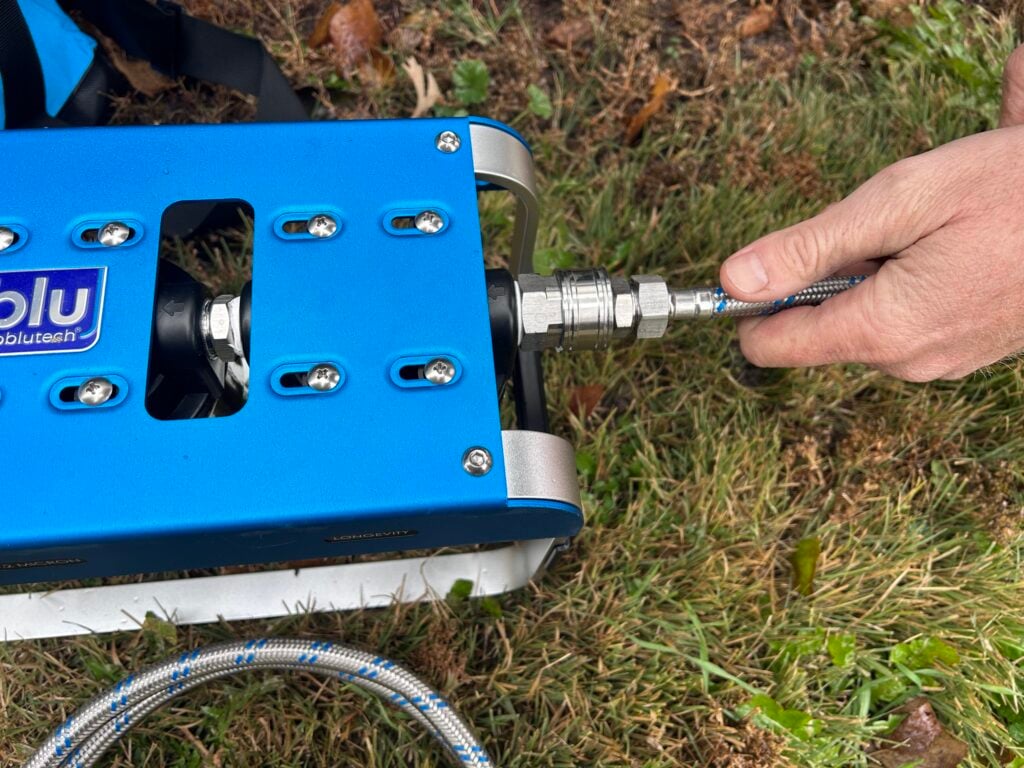
One of the advantages of the Blu Technology AR3 is that it doesn’t require permanent installation. You can connect it at the campsite when hooking up your RV to city water.
Here’s how to connect the system:
- Make sure the campground water is turned off. Attach the included three way splitter if you want a separate water connection for other uses.
- Attach the pressure regulator to the water supply connection. This protects both the filtration system and your RV from excessive water pressure.
- Connect the 25 foot stainless steel hose from the water supply to the inlet side of the AR3 using the quick connect fittings.
- Attach the 5 foot stainless steel hose to the outlet side of the filtration system.
- Flush the filters before connecting the outlet hose to your RV. Follow the recommended flushing procedure for new cartridges.
- Turn off the campground water, connect the outlet hose to your RV’s city water inlet and turn the water back on.
- Check all connections for leaks and make sure water is flowing properly inside your RV.
The water passes through the filtration system before entering your camper, so filtered water is available at your sinks, shower and other fixtures.
If you’re using your RV’s fresh water tank instead of a city water connection, you can also filter potable water as you fill the tank.
How Long Does the Blu Technology RV Water Filter Last?
Blu Technology recommends replacing the AR3 filters approximately every three to four months, depending on water quality and usage.
The filters may need to be replaced sooner if you’re frequently connecting to water sources with high sediment levels. A noticeable reduction in water flow can also indicate that it’s time to check your filters.
Replacement cartridges are available directly from Blu Technology. The AR3 uses the company’s three stage replacement filter pack.
Between trips, drain and store the system properly. Blu Technology recommends protecting the AR3 from freezing temperatures because water left inside the filter housings can freeze and damage the components. The published operating temperature range is 40°F to 125°F.
It’s also important to remember that an exterior water filter doesn’t replace regular RV fresh water tank maintenance. You should still sanitize your RV fresh water tank periodically to prevent buildup and maintain your RV’s water system.
After a decade of full time RV living, I consider water filtration an essential part of setting up at a campground.
The Blu Technology AR3 Essential Bundle is a great option for RVers who want a portable, three stage filtration system with durable components and convenient connections.
Shop the Blu Technology AR3 Essential Bundle and get a 7% discount using our link.

Christina Pate is a seasoned full-time RVer who, along with her husband Justin, has journeyed across the US, Canada, and Mexico. Drawing from her extensive travels, RV repairs and RV renovations, she founded Travels with Ted to guide and inspire fellow RV enthusiasts. Christina is also the co-author of The Owner’s Guide to RV Maintenance and the creator of My RV Log Book.
