
This post may contain affiliate links. See our affiliate disclaimer here.
In our 10 years of RV living, we’ve dealt with multiple stink bug invasions. If you’ve recently opened a cabinet in your RV to find a brown, shield-shaped bug, don’t worry. In this article, we will tell you exactly how to get rid of them and how to prevent them in the future.
Keep reading to learn how to prevent stink bugs from ruining your next camping trip.
Contents
What Are Stink Bugs?
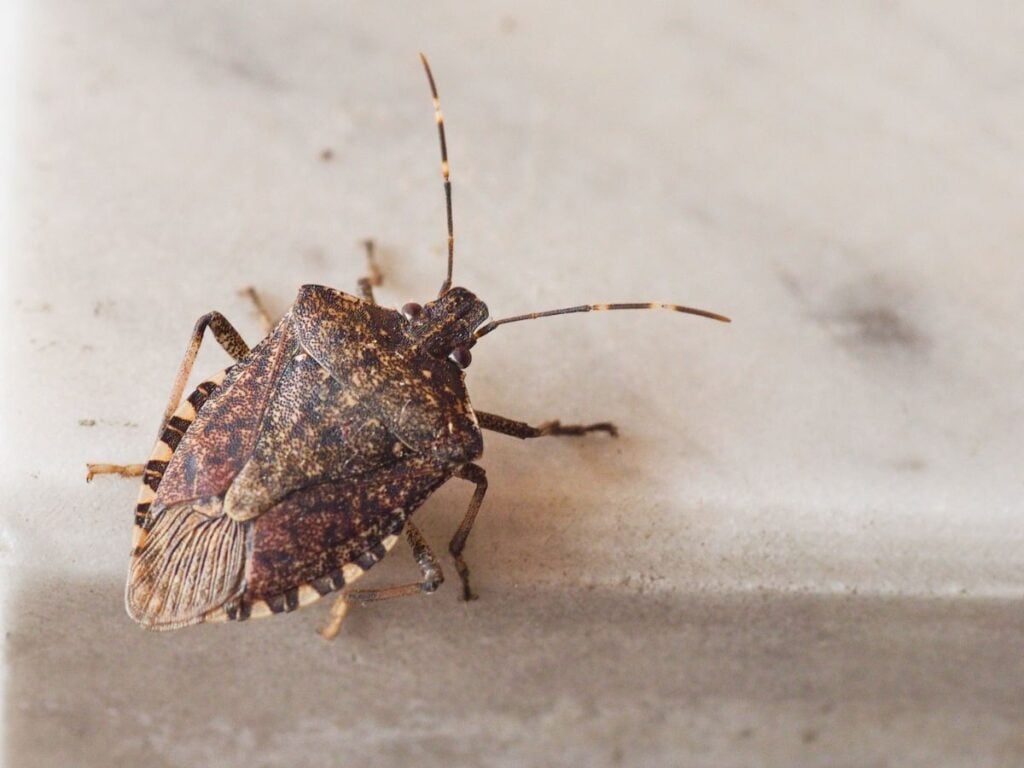
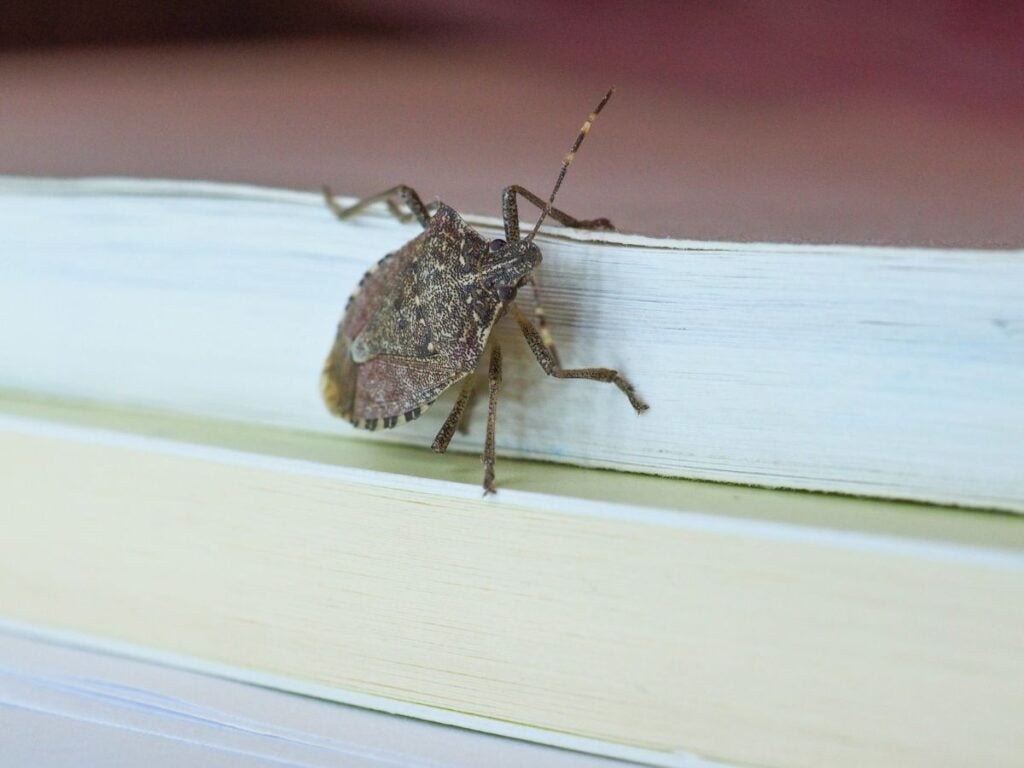
The most common stink bug found in RVs is the Brown Marmorated Stink Bug.
This invasive species has spread throughout much of the United States since its introduction in the late 90s.
Here’s how to identify one:
- Brown or gray mottled coloring
- Shield-shaped body
- About ½ inch long
- Antennae with light-colored bands
- Slow-moving
Do They Really Stink?
Stink bugs are kind of like skunks. They release a strong odor when threatened. So, they won’t stink up your RV by just hanging out inside, but they will release their unpleasant odor if you try to crush them.
Are They Harmful to Humans?
Stink bugs are generally not harmful to humans or pets. They do not bite or sting. Generally, stink bugs in your RV are more of a nuisance than a threat. However, some people (and pets) may have a reaction to the fluid stink bugs emit when threatened. If a stink bug leaves its stink on you, wash the area quickly with soap and warm water.
Why Do Stink Bugs Get in RVs?
Stink bugs generally come into RVs because they are trying to find a safe place to survive winter. In late summer and early fall, stink bugs start to look for a protected space to winter. They often find this shelter in houses, but RVs work just as well for their purposes.
Stink bugs can occupy your RV while you are in it (we live in ours full-time, and we’ve picked them up in late fall in Ohio twice). However, even more often, they infest RVs that are sitting in storage. They can get inside through any small gap and settle inside walls, behind cabinets, under mattresses, and in storage bays.
Because stink bugs are in a hibernation-like state during the winter, you may not notice them crawling around until early spring, but they’ve probably been there for months.
How to Prevent Stink Bugs in Your RV
Seal Entry Points
The best way to prevent a stink bug infestation in your camper is to prevent them from getting in the first place.
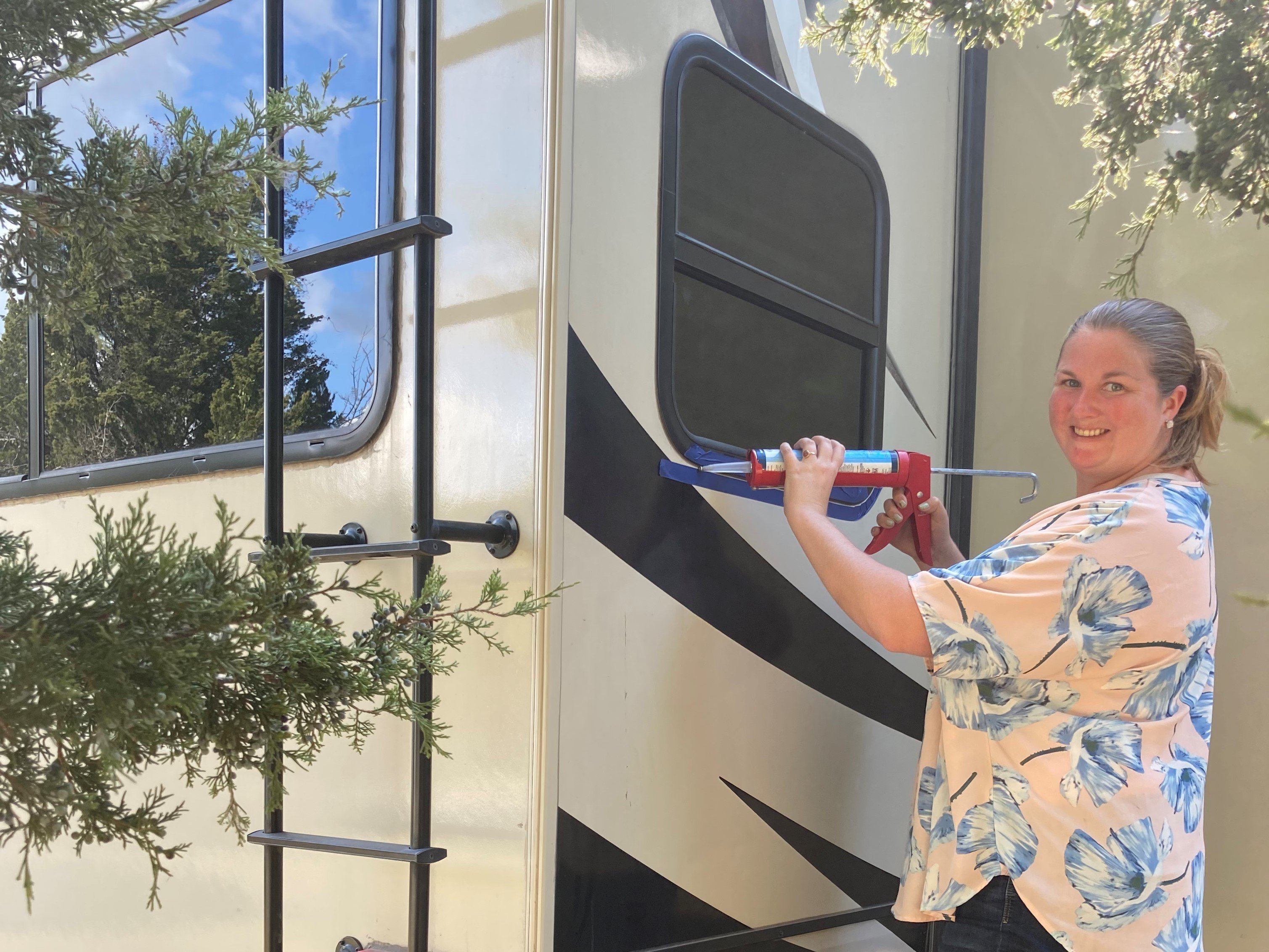
Regularly check all the seals around your RV windows, doors, and storage bays and repair cracks in the seals. Read our complete guide to RV seal maintenance to learn how to properly repair roof and exterior seals.
Also search the underbelly and walls for any gaps where bugs could get in. Focus on areas where plumbing and wiring enter the RV, as these areas are more likely to have a gap. Repair all holes using copper mesh and/or spray foam.
Making sure your RV is properly sealed up before storage is crucial for preventing infestations of both insects and rodents.
Install Vent Screens
Another common RV entry point for stink bugs is appliance vents. The vents for your RV’s furnace, refrigerator, and water heater are all essentially large holes that provide direct access inside your RV.
To close off these holes without completely blocking the vents, install insect screens over the vents.
Consider Where You Store Your RV
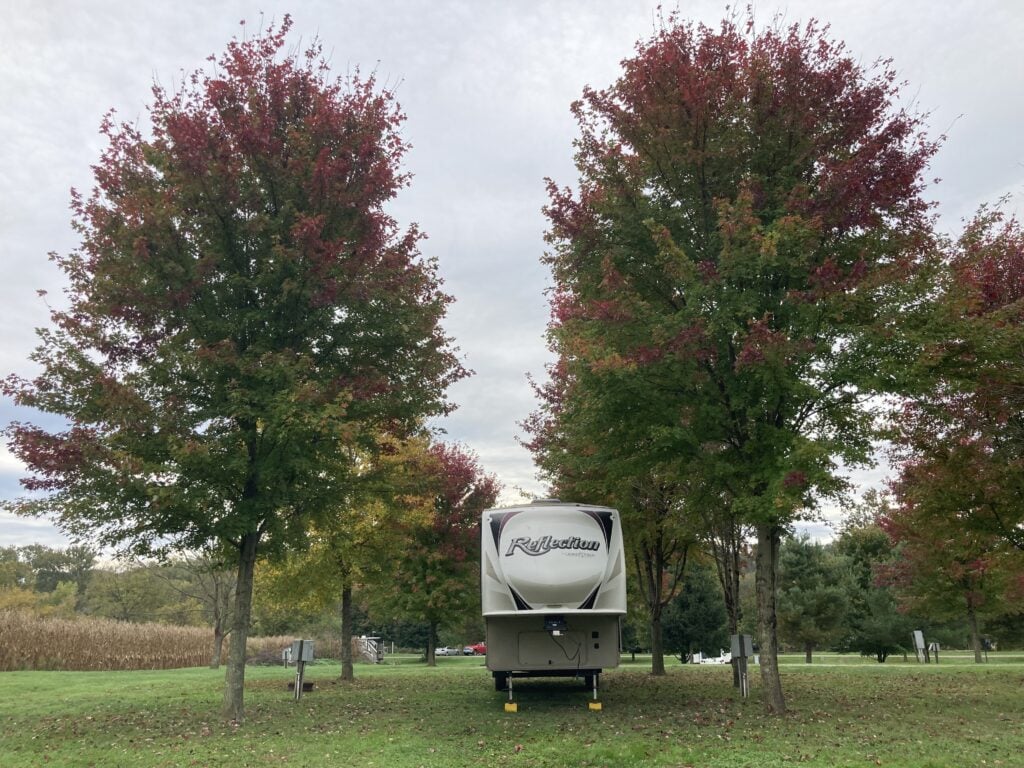
Stink bugs gather on trees in late summer and early fall. Then they move from these trees into nearby structures where they will spend the winter.
If your RV is parked near trees or heavy brush, it is more likely to be the closest warm structure for a bunch of stink bugs. If possible, park your RV on a hard surface away from trees or thick vegetation.
Use a Perimeter Spray
Spraying a perimeter pesticide around RV doors, windows, and other entry points can also help keep stink bugs away. Interior pesticides are generally not recommended for stink bugs, as the goal is to keep them out of the RV.
Choose a spray that specifically lists stink bugs, and read all package instructions to make sure it is applied safely. Many RVers report success preventing stink bug invasions, using Ortho Home Defense Spray.
How to Get Rid of Stink Bugs in Your RV
Of course, it is not possible to prevent all stink bugs from entering your RV. We collected them a few years ago in Ohio, and they were just flying in through the front door every time we came in or out.
The most important thing to know is that you do not crush stink bugs. Crushing them will release their stink all over your RV.
Vacuum Them Up
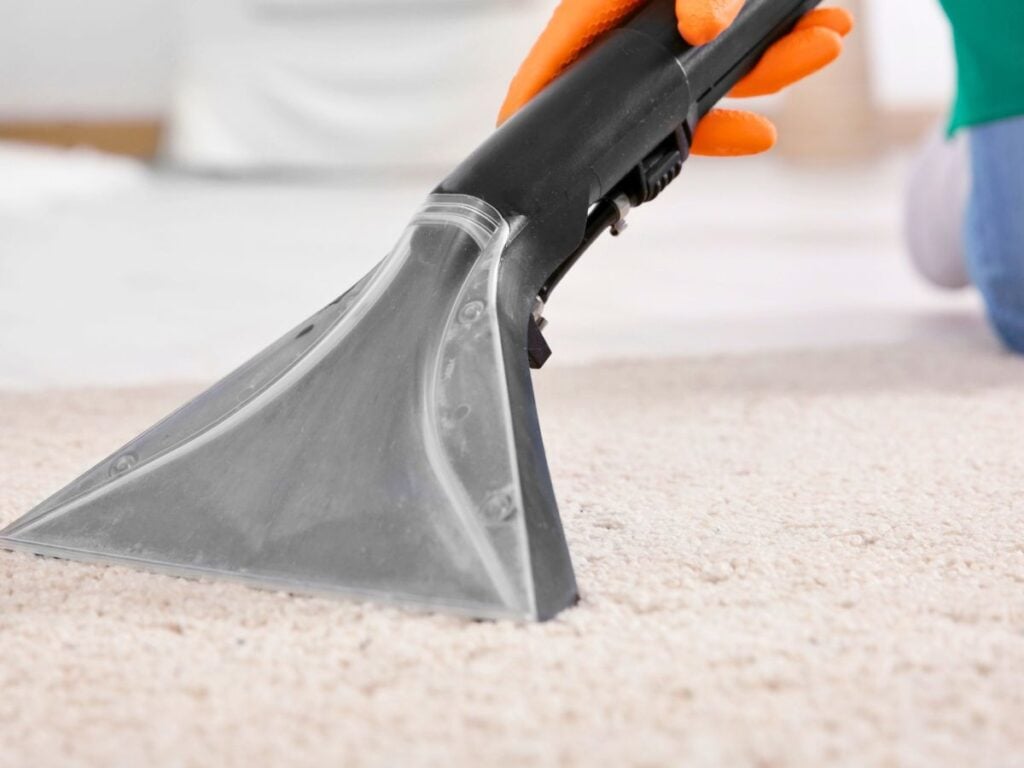
The most effective way to remove stink bugs is to simply vacuum them up. It’s ideal to suck up the bugs into a vacuum with a disposable bag for easy cleanup, and so your vacuum does not get exposed to any stink from bugs that are damaged by the suction.
If you are using a shop vac without a bag, you can put a small amount of soapy water into the canister. The bugs will die quickly once they hit the water, then they can be transferred to a sealed bag for easy disposal.
Since stink bugs are often hidden inside walls or other hard-to-reach spaces during the winter, it is easier to vacuum them up and remove them from your RV in late winter or early spring.
As the weather starts to warm, open the blinds in your RV on a sunny day. The warmth and light should attract the bugs to the window as they will want to get outside. Having the bugs gathered around the window will make it easier to find them and vacuum them up.
Why Do I Keep Finding More Stink Bugs?
Unfortunately, I can tell you from experience that once you have stink bugs in your RV, you will likely be finding stray bugs for months to come.
The good news is that this doesn’t mean stink bugs are reproducing inside your RV. Stink bugs do not mate or lay eggs inside. Instead, you are simply watching stink bugs come out of hibernation at different times. They don’t emerge from their overwintering spots all at once.
So, be prepared to go through multiple rounds of vacuuming to completely remove stink bugs from your RV.
Will Stink Bugs Come Back Every Year?
They might. Stink bugs release aggregation pheromones to indicate that a space is a good location for overwintering. If your RV has had one stink bug infestation, it has been marked as a good stink bug hangout.
But, if you use the prevention techniques mentioned earlier in this article, you will still greatly reduce your chances of a stink bug infestation. Even if you still get a few stink bugs, properly sealing your RV and parking it away from trees should limit the number of bugs inside your RV.
Thanks for reading our complete guide to removing stink bugs from your RV. We hope you are soon bug-free and on the road enjoying your travels.
Go ahead and check out our complete guide to de-winterizing your RV to make sure you don’t run into any other unpleasant surprises on your first camping trip of the season.
Happy Camping!

Christina Pate is a seasoned full-time RVer who, along with her husband Justin, has journeyed across the US, Canada, and Mexico. Drawing from her extensive travels, RV repairs and RV renovations, she founded Travels with Ted to guide and inspire fellow RV enthusiasts. Christina is also the co-author of The Owner’s Guide to RV Maintenance and the creator of My RV Log Book.
